How to use AI in ads without losing your customers’ trust
Audiences grade the finish, not the process. Put AI where it makes the work better, keep a person on what the viewer sees, and hold anything a good colleague would not ship.


Use AI where it makes the work better, not only cheaper, and keep a person deciding what the audience will see: the idea, the look the work must hold, and what gets thrown out. Audiences judge the finished piece, so a cheap-looking result costs trust however the brand describes its process. Disclose AI when it changes what a viewer would take as real, such as a synthetic person or a scene presented as a real event.
In early October a soft-drink brand’s AI-made Halloween spot played in the ads before a film, and one moviegoer found it online afterward to complain about it. The social reactions Creative Bloq described were almost all negative, and many came from people saying they would stop buying the drink.
Creative Bloq noted that many people oppose AI imagery on principle. Most of the complaints it quoted, though, were about what was on the screen: how bad it looked, and how it cheapened the brand. That is the useful lesson for any brand putting AI into its ads, and it is not “stop.”
Why do some AI-made ads cost a brand trust?
Because the audience judges what it sees, and work that looks cheap reads as a brand cutting corners on them. In a 2026 survey of 22,000 consumers in 22 markets by DoubleVerify, which sells media-quality verification, 42% said low-quality or “uncanny” AI advertising would hurt their opinion of the brand, while 40% viewed polished, professional AI ads positively. The same survey found 56% cannot consistently tell when content is AI-made.
So the label matters less than the finish. The people making the ads tend to misread this. In IAB’s January 2026 study with Sonata Insights, 82% of US ad executives believed Gen Z and Millennial consumers felt positive about AI-generated ads; 45% of those consumers did. Cost efficiency had become the benefit executives cited most, at 64%, and IAB’s researchers flagged the risk themselves: AI used mainly to cut production cost could undermine quality.
Nobody watching your ad sees your process. They see the finish.
Should we stop using AI in our ads?
No. Put it where it makes the work better, and keep people on the decisions the audience can see. IAB’s January 2026 study with Sonata Insights found 83% of ad executives say their company already uses AI in the creative process, and recommends using it “to enhance creative quality, rather than to produce advertising assets more cheaply.” That is a line about where AI sits, not whether it is allowed.
Our view: AI earns its place where a person then judges the result: more first options to choose from, versions to test, resizing, retouching a real photograph, sketching a scene before anyone commits to it. It spends trust where the audience reads care: an invented person, a face that is nearly right, a scene nobody art-directed, a product shot that makes the product look worse.
What should a person decide before the AI makes anything?
Four things, written down before anything is made: the one idea, the world it lives in, the finish bar, and who says no. Keep them where every tool and every person on the team can read them:
The one idea What the piece must make the viewer feel or understand, in one sentence. If nobody can write it, the model fills the gap with the average.
The world it lives in What stays the same in every piece, such as palette, materials, light, and what never appears, and what is allowed to change each time.
The finish bar What would read as cheap for your brand: wrong hands, waxy skin, garbled lettering, a product that looks off. Name it, so a reviewer can check for it.
Who says no A person who did not make the piece, with the authority to hold it. If a good colleague would not ship it, it does not ship.
That written set is the creative half of what we call a Brand Brain: the approved brand thinking your people and AI tools such as Claude and ChatGPT read before they make anything, kept in files your company owns.
Do we have to tell people we used AI?
Tell them when AI changes what a viewer would take as real. IAB’s AI Transparency and Disclosure Framework, published in January 2026, avoids labeling every use and calls for disclosure when AI materially affects authenticity, identity, or representation in ways that could mislead. Its examples include:
- Images or video generated from a prompt to depict real-world events.
- Digital twins of living people shown in events that never happened (standard endorsements aside), and any digital twin of someone who has died.
- AI voices of people who have died saying new things, or of living people describing events that never happened.
- Synthetic avatars and chatbots in ads that simulate a human conversation.
Disclosure is not a penalty. IAB found US Gen Z and Millennial consumers receptive to it, and many said knowing an ad was made with AI would make them more likely to buy. It does not rescue a weak finish. This is industry guidance, not law, so check the rules in your markets with your own counsel.
What does careful AI use look like on a real brand?
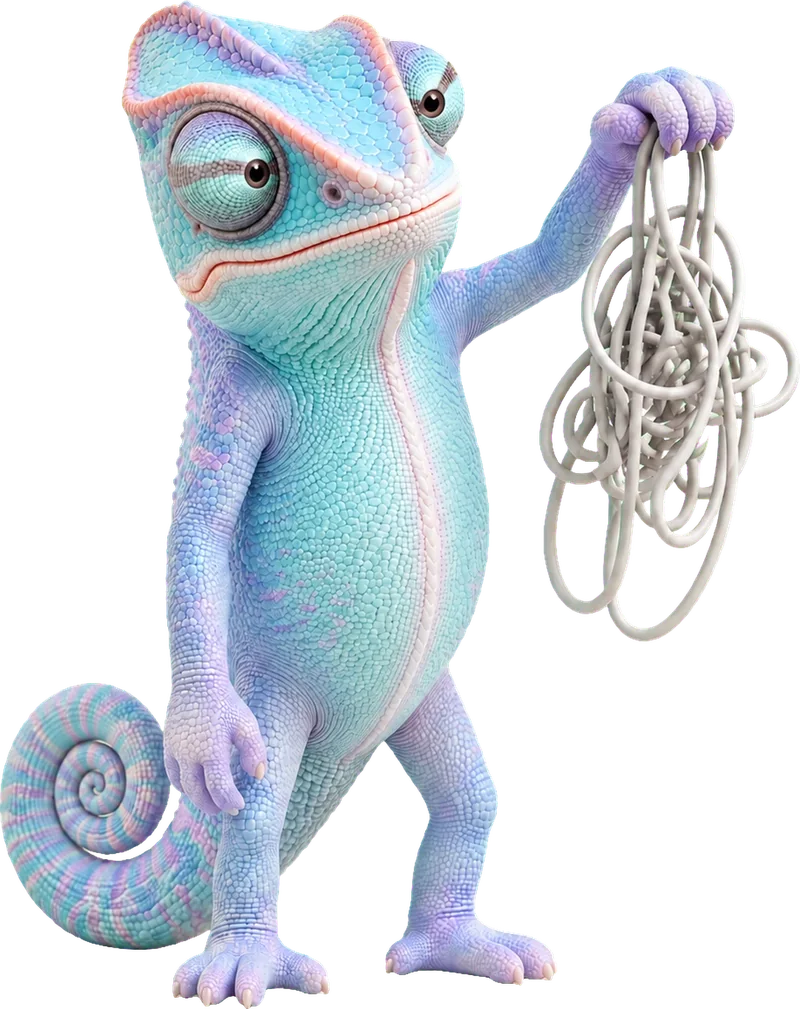
Careful use looks like written rules every tool reads before it makes anything, and a reviewer who did not make the piece and can hold it. Every cover on this blog is AI-made that way, including the one at the top of this page. Our covers used to be rendered rooms in plaster. Across two rounds of picking the best and worst of them, we agreed they read as AI-made, so on 29 September we moved to paper collage, and on 15 October to what you see now: one real object, with our brand colors arriving as light on its surface.
The rules sit in our Brand Brain, where every tool that makes a cover reads them: one object a reader recognizes, no text, logos, or people, one idea that reads at thumbnail size, and a different object and setting from its neighbors. A cover stays unapproved until a reviewer who did not make it checks it against those rules and it is approved beside the covers around it.
The rule got its teeth from a mistake. On 17 September an article of ours went live with “Cover pending” where the picture should have been. The fix was a standard, not a reminder: nothing ships that a good colleague would not ship. And a fence behind it: our publisher now refuses any article without an approved cover.
What we cannot tell you is that this raised anyone’s trust in us; we have not measured that. It is the method we run on our own work, not a result we can claim for yours.
Where should we start?
With the next ad you were going to make with AI anyway. Before anything is generated, write the idea, the world, the finish bar and who says no on one page. When the piece is done, hand it to someone who did not make it, with the finish bar in their hand, and let them hold it.
If it holds Keep the page. It is the start of your creative rules, and the next piece starts from it instead of from a blank prompt.
If it gets held Look at why. A fix the model can make is a production note. A disagreement about what the brand should look like is a strategy decision, and it belongs to people.
If several teams make ads That is when one approved source, read by every person and every tool, starts to pay.
For the bigger picture, read what an AI brand strategy is, and for keeping the checks fast, how to test AI brand rules without blocking work.
Where this comes from.
-
Company research release (survey commissioned by DoubleVerify)
DoubleVerify · Global Study: Poor-Quality AI Content Puts Brand Trust at Risk
Used: survey of 22,000 consumers across 22 markets; 42% say low-quality or “uncanny” AI advertising would negatively affect their opinion of a brand; 40% view polished, professional AI ads positively; 56% cannot consistently identify AI-generated content. DoubleVerify sells media-quality verification, so it has a stake in the finding. Opened Oct 28, 2026; re-opened Nov 2, 2026 and Nov 4, 2026.
-
Trade association research
IAB with Sonata Insights · The AI Ad Gap Widens
Used: US survey of more than 500 Gen Z and Millennial consumers and 100 ad executives; 82% of executives believe these consumers feel positive about AI-generated ads, 45% do; 83% of executives say their company has deployed AI in the creative process; cost efficiency is the top cited benefit at 64%; the recommendation to use AI to enhance creative quality rather than to produce assets more cheaply; consumers receptive to disclosure, which can increase purchase likelihood. Opened Oct 28, 2026; re-opened Nov 2, 2026 and Nov 4, 2026.
-
Trade association guidance
IAB · IAB Releases Industry’s First AI Transparency and Disclosure Framework
Used: a risk-based model that avoids blanket labeling and calls for disclosure when AI materially affects authenticity, identity, or representation in ways that may mislead, with its listed examples, paraphrased. Industry guidance, not law. Opened Oct 28, 2026; re-opened Nov 2, 2026 and Nov 4, 2026.
-
Trade press commentary
Creative Bloq · Fanta’s AI slop Halloween advert is a real horror show
Used: the Halloween spot was seen by a moviegoer in the ads before a film; social reactions were almost all negative, with many people saying they would never buy the drink again; the writer notes many people oppose AI imagery on ethical grounds. Commentary, not systematic data; the brand is described rather than named in the article text. Opened Oct 28, 2026; re-opened Nov 2, 2026 and Nov 4, 2026.